
Call today
(765) 253-3623
Your driveway used to look like this. It still can.
Concrete driveways, patios, sidewalks, and pool decks lose their color to years of grime, algae, and tire marks. We bring it back with the right pressure for the surface, no streaking, no cracked concrete, just clean.
Pressure washing is high-pressure water, usually 2,500 to 3,500 PSI, run through a surface cleaner attachment that spins two jets in a flat, even pattern across the concrete. That even pattern matters: a wand held by hand at the wrong angle leaves visible zebra stripes in the finish. Concrete can take that pressure because it's hard and non-porous, which is exactly why we never use this method on siding, roofs, or wood, those need a soft wash instead.
Poured concrete, stamped concrete, exposed aggregate, and paver patios all clean up differently. Stamped and aggregate surfaces have more texture to trap dirt and need a slower pass; plain broom-finish concrete cleans faster. Oil stains, rust spots, and tire marks get a degreaser pre-treatment before we ever turn on the machine, which lifts far more than pressure alone ever would.
Central Indiana's two busiest pressure washing seasons are spring, when winter road salt residue and pollen have built up a dull film, and fall, before leaf tannins stain concrete for the whole winter. We do avoid deep-winter washing when temperatures hover near freezing, since water can work into small existing cracks and refreeze; a 40°F day or warmer is the safer call.
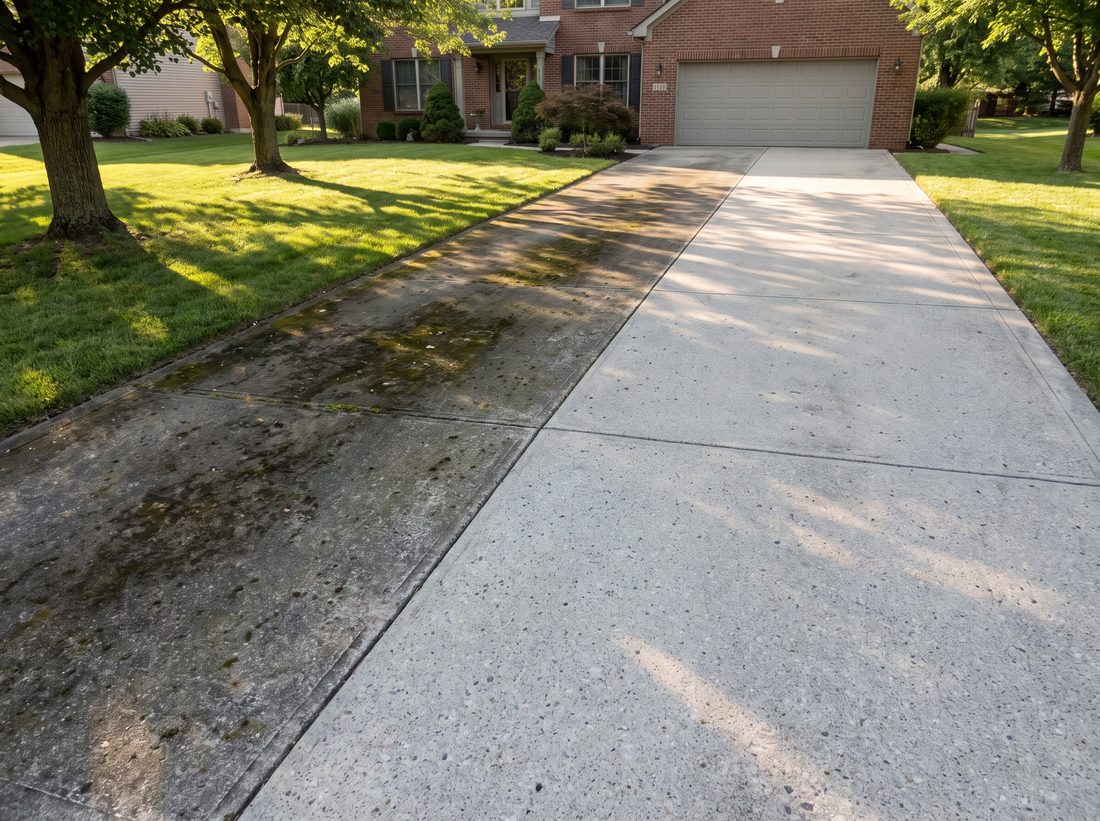
Oil, rust, and tire marks get a degreaser first so the wash actually lifts them instead of just wetting them down.
The surface cleaner attachment covers every square foot at the same pressure and distance, so there's no patchy or striped finish.
Corners, expansion joints, and edges along garage doors and landscaping get hand-finished where the machine can't reach evenly.
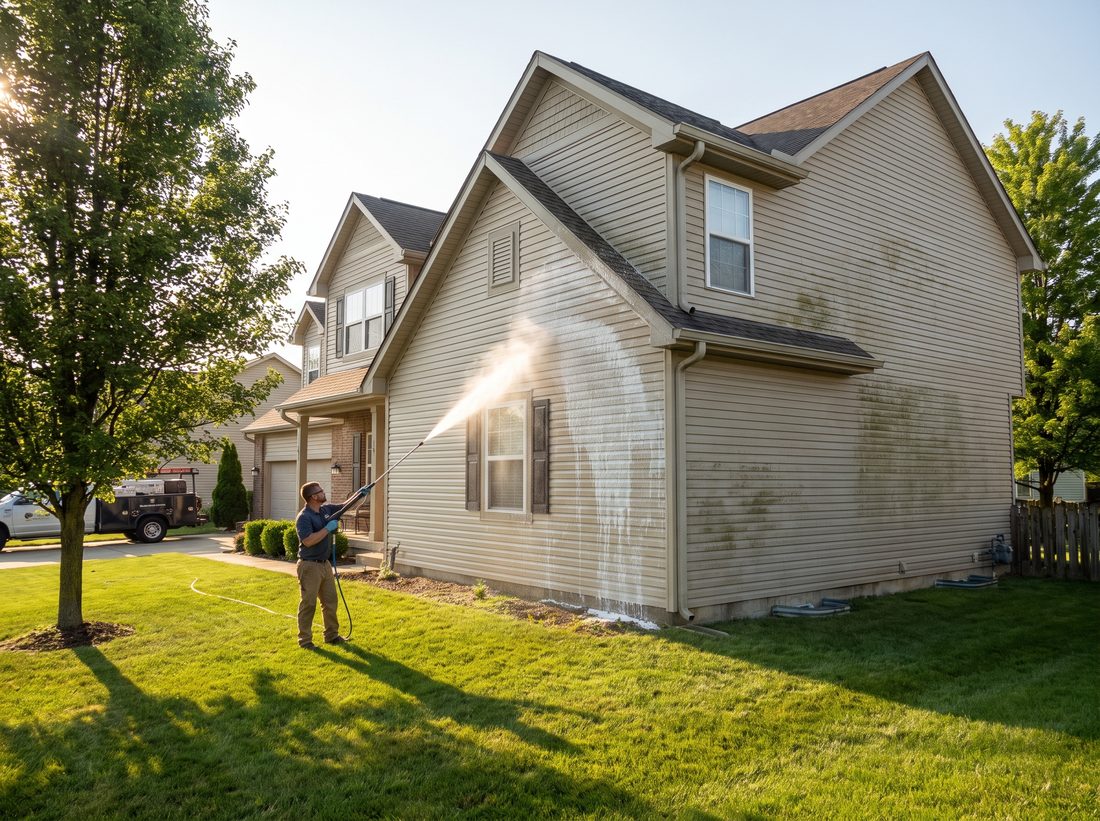
The low-pressure method for siding, brick, and stucco. Different surface, different tool.
See soft washing →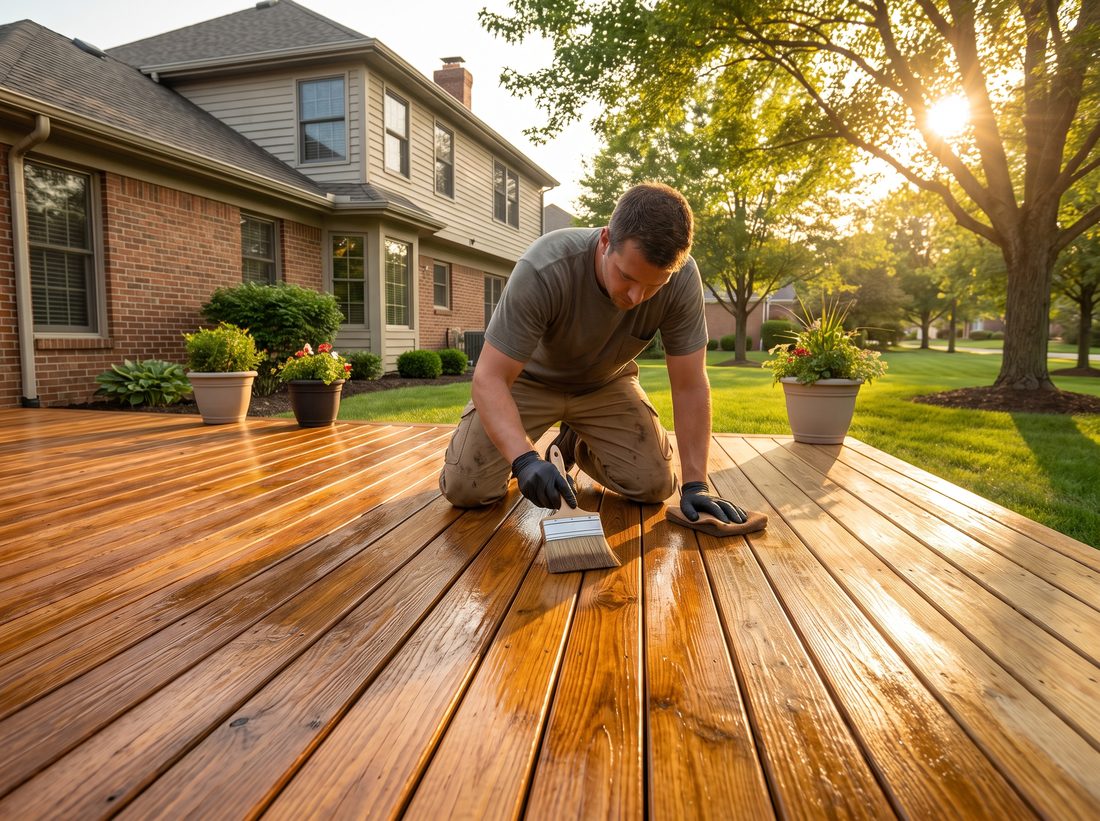
Clean first, then protect. Sealing after a wash keeps the fresh look through winter salt and freeze-thaw.
See sealing →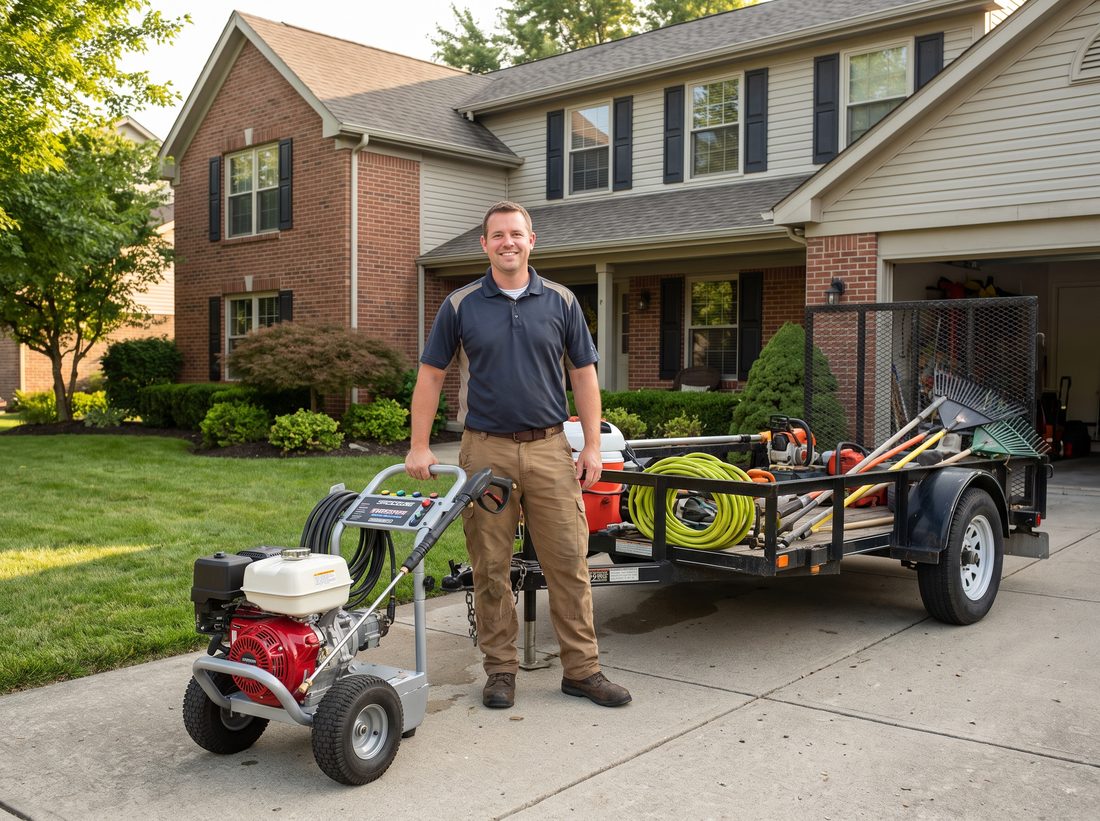
Upscale finishes, stamped concrete, and pool decks. See how we work in this area.
View area →Free estimate, honest price, no cracked concrete.