
Water Damage Drying/Los Angeles County
Dry it now.
Or treat it later.
A slab leak or a storm in a wall cavity is a drying problem for a week, and a remediation problem after that. The fastest mold job is the one that never starts.
After a leak, book the free inspection first
Somebody maps how far the water actually travelled, which is never just the room where you saw it, and tells you whether you have a drying problem or already a mold problem.
Water damage drying, before it becomes mold
Water you can see is the easy part. The water that matters is inside the wall cavity, under the floor, or sitting on cold sheathing above a bathroom, and a Southern California winter can put a season’s rain into a flashing detail in one December storm. In a closed cavity, growth can take hold within days, which is why the window between a leak and a mold job is measured in days rather than weeks.
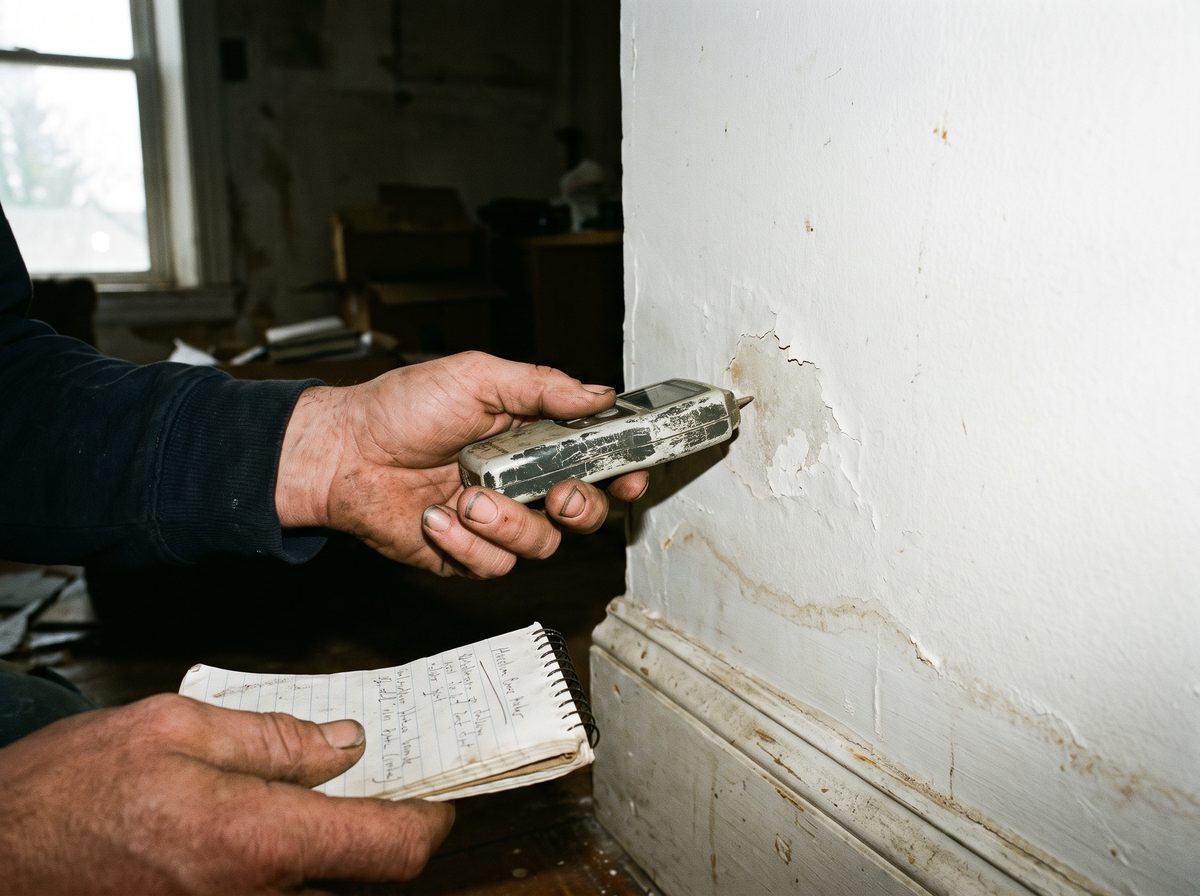
The visit starts the way every job here starts: moisture mapped with meters and thermal imaging, the source found, and the wet structure identified before anyone talks about equipment. Then the affected assemblies get dried and monitored until the numbers say dry, not until the fans have simply been there a while.
If mold has already started
Drying has a deadline.
Sometimes the leak is two weeks old by the time anyone calls, and drying alone no longer closes the file. If growth has taken hold, the path is the five step dry fog process: treated in place, no rebuild bill, cleared by an independent laboratory.
You hear which situation you have at the inspection, in writing, before any work is proposed.
The insurance paper trail
- Mold after a sudden covered event, a burst line, a slab leak, a storm, is often covered; slow seepage usually is not
- The difference usually turns on documentation: moisture readings, photographs, and a written scope in the shape adjusters expect
- The discipline comes from Florida, where every insurance job had to pass an independent assessor
- We do not repair the plumbing itself: we find the source, document it, and point you to the right trade
The fastest mold job is the one that never starts.
Dry structure does not grow mold. Finding the water while it is still a drying problem is the cheapest thing this company does, and the inspection that finds it is free.
Water damage and mold questions
In a wet, closed cavity, growth can take hold within days. That is the whole argument for treating a leak as urgent even after the visible water is gone: the surface dries first and the framing dries last, and mold does not wait for the drywall to feel dry.
Often, when the cause is a sudden covered event such as a burst line, a slab leak or a storm; slow seepage usually is not covered. What we control is the file your adjuster sees: moisture readings, photographs and a written scope, in the format carriers expect.
No, and we will not pretend otherwise. We find the source, document it, and point you to the right trade, because drying a cavity while the leak that fed it is still running is theatre. What is not corrected at the source always comes back.
Maybe, and it is worth knowing rather than hoping. A musty smell, new staining, or symptoms that clear up when you leave the house are the signs it did not dry clean. The inspection is free, the moisture map answers the question, and if everything genuinely dried, that is what the findings will say.
Book a free inspection
Send the details and a photo if you have one. After water intrusion, most requests get a call back the same business day.
What happens next
An inspector walks the property, most often Noel or Eddie, the two their customers name in review after review.
You get the moisture map and written findings: a drying problem, a mold problem, or nothing at all. No obligation.