Family-Owned · CSLB #1103201 Mon-Fri 7-7 · Sat 7-5
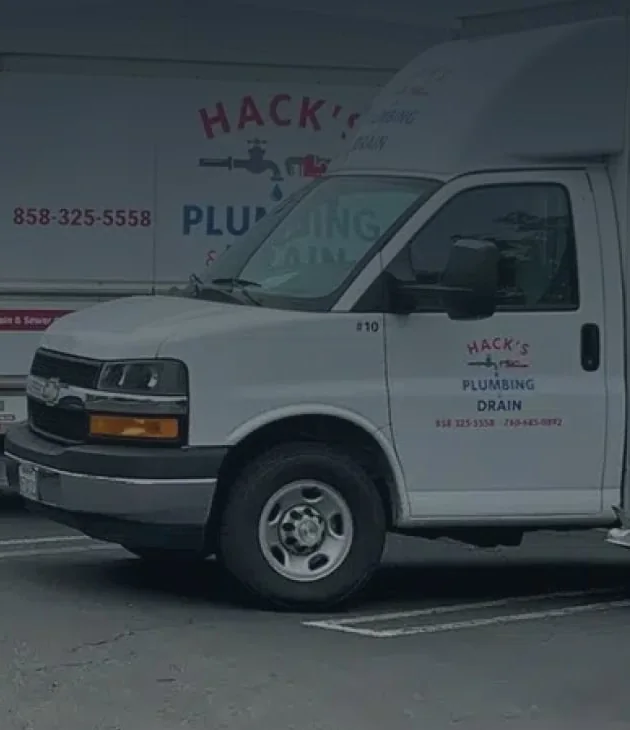
Hack's Plumbing and Drain service vans and hydro jetting trailer
Serviced Around Your Hours, Not Ours

Grease Trap Service In San Diego County

Clean It At 25 Percent, Not At Failure

G★★★★★ 4.9 Rating on Google · A+ BBB Accredited · CSLB #1103201
Grease Trap Installation And Replacement

Grease Trap And Interceptor Service For Commercial Kitchens

A grease trap is not optional equipment in a commercial kitchen. It is what keeps fats, oils and grease out of the municipal sewer, it is required in most food service establishments, and when it fails it fails during service.

The single most useful number in this whole subject is 25 percent. That is the fill level at which a trap should be pumped, and the reason is not fussiness: past roughly a quarter full, separation stops working properly and grease starts leaving with the wastewater. Cleaning quarterly is the common rule, but a high-volume kitchen can hit 25 percent in weeks.

We install, replace, size and service traps and interceptors, and we schedule the work between services rather than through them.
  • Sizing calculated from fixtures and flow, not guessed
  • Installation, replacement and scheduled cleaning
  • Work scheduled around service hours
  • Documentation for health and wastewater compliance
Request Free Estimate
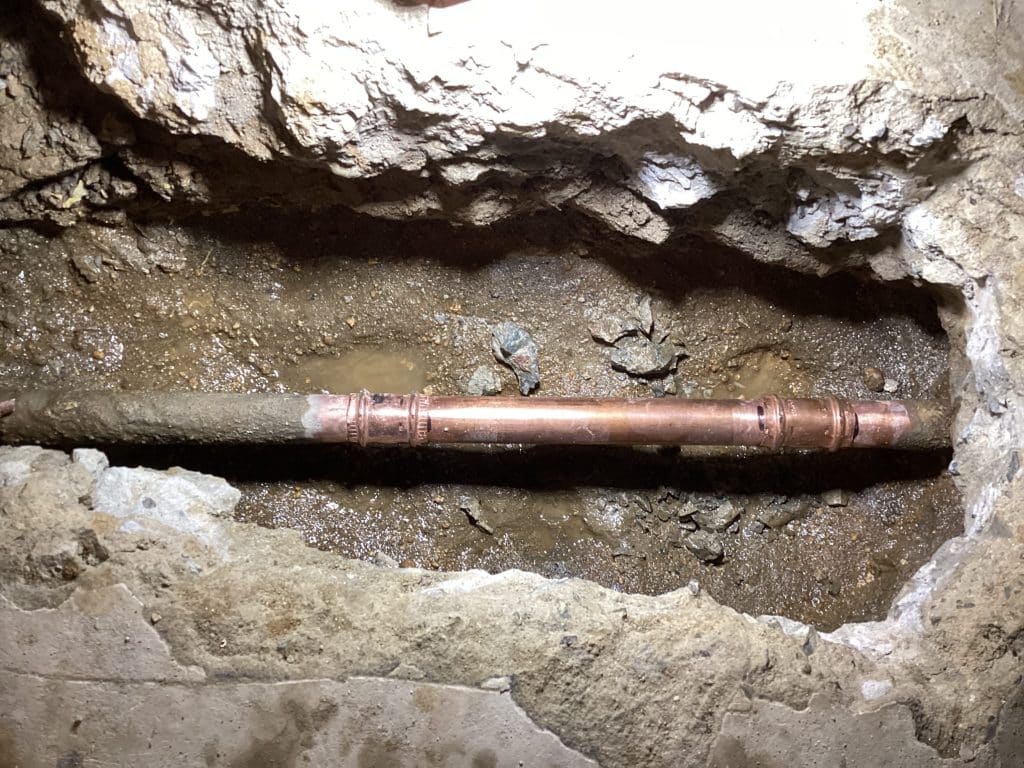
A copper repair section soldered into an open slab trench on one of our San Diego jobs
Know The Signs

Signs You Need Grease Trap Service

The first three are routine. The last three mean call now.

Persistent Foul Odors

Sewer or rancid smell in the kitchen that returns after cleaning. Usually the trap is past its service point and the odor is what escapes when separation stops working.

Slow Drainage

Kitchen fixtures draining slower than they did. Grease is narrowing the line downstream of the trap, which is exactly what the trap exists to prevent.

Excessive Grease Buildup

Visible accumulation in fixtures or at the trap. Once grease is appearing upstream, the system is already past the point where cleaning is a scheduled task.

Overflowing Interceptor

An interceptor pushing back is an emergency in a working kitchen. It stops service, and in most jurisdictions it is also a reportable event.

Cracks Or Corrosion

A trap with a compromised shell is not containing anything. This is replacement territory, and continuing to use it risks both a failure and a compliance problem.

Repeated Maintenance Issues

A trap needing attention more often than it should is usually undersized for the kitchen it serves. More frequent cleaning treats the symptom; correct sizing solves it.

What Brings People Here

Installation, Replacement, Sizing And Service

Whichever applies, the work is scheduled so your kitchen keeps running.

Routine Cleaning: Your Situation

  • Approaching the 25 percent line
  • Quarterly service due
  • Odors returning between cleans
  • Inspection coming up

Routine Cleaning: What We Do

  • Pump and clean to the required standard
  • Inspect the shell, baffles and lids
  • Document the service for compliance
  • Set an interval matched to your volume

Replacement: Your Situation

  • Cracks, corrosion or a failing shell
  • Trap undersized for current volume
  • Repeated failures despite service
  • Kitchen expanded since installation

Replacement: What We Do

  • Size the replacement from fixtures and flow
  • Handle permitting where required
  • Install and commission the new unit
  • Schedule the work around service hours

New Installation: Your Situation

  • Opening a new kitchen
  • Adding food service to an existing space
  • Health department requires one
  • Building out a tenant space

New Installation: What We Do

  • Calculate required capacity properly
  • Coordinate with your contractor and inspector
  • Install to code and inspect
  • Leave you with the documentation

Overflow Or Backup: Your Situation

  • Interceptor overflowing during service
  • Kitchen drains backing up
  • Grease at a floor drain
  • Health inspection imminent

Overflow Or Backup: What We Do

  • Emergency response, day or night
  • Clear the immediate blockage
  • Jet the affected line back to bare pipe
  • Diagnose whether sizing is the root cause
Worth Knowing

Grease Trap Versus Grease Interceptor

They are not the same thing, and the wrong one is a recurring problem rather than a one-off cost.

Grease TrapGrease Interceptor
Where it sitsIndoors, under or near the sinkOutdoors, usually underground
Typical capacitySmaller, lower flowMuch larger, high flow
SuitsCafes, small kitchens, single fixturesRestaurants and high-volume kitchens
Service frequencyMore often, smaller jobLess often, larger job
Upfront costLowerHigher, plus excavation
If undersizedConstant service, grease still escapesSame problem at larger scale
How we decideFixture count and flow rateFixture count and flow rate
How It Works

Our Grease Trap Process

1

Diagnose It Properly

We find what is actually wrong rather than replacing the first part that could explain it. The fix is often smaller than expected.

2

Upfront Flat-Rate Price

You get the price before work starts, parts included, and an honest read on repair versus replacement.

3

Fixed And Tested

We complete the work, test it in front of you, and leave the area the way we found it.

Satisfied Customers

What Our Customers Say

★★★★★

"Cesar was very knowledgeable and professional. He knew what the problem was and resolved our issue very quickly! Would highly recommend Hack's Plumbing & Drain to my family and friends!!!"

Eloise VigliottiGoogle Review
★★★★★

"I've been working with Hack for over 20 years, he and his team are the only ones I trust. From small job to large, they always get it done right and take care of you."

Robert PeelleGoogle Review
Frequently Asked Questions

Your Grease Traps Questions, Answered

Why are grease traps necessary for commercial kitchens?
They are required in most food service establishments, and they keep fats, oils and grease out of the municipal sewer. Without one, FOG causes blockages in your plumbing and in the public system, which becomes both a plumbing problem and a regulatory one.
How often should a commercial grease trap be serviced?
At least quarterly for most kitchens, and considerably more often for high volume. The useful rule is the 25 percent line: once the trap is a quarter full, separation efficiency drops and grease begins leaving with the wastewater, so that is the point to pump rather than a date on a calendar.
How is the right grease trap size determined?
From fixture count, wastewater flow rate, grease output and the applicable plumbing code. It is a calculation, not an estimate, and getting it wrong is the most common reason a kitchen ends up servicing its trap far more often than it should.
How do I know if my grease trap is full?
Slow drainage, foul odors that return after cleaning, and grease appearing in kitchen fixtures. By the time those show up the trap is usually well past 25 percent, which is why scheduled inspection beats waiting for symptoms.
Can bad installation cause plumbing failures?
Yes. Incorrect sizing or installation leads to sewer backups, odors, drainage failure and expensive repairs. It is also the kind of fault that surfaces during an inspection rather than at a convenient moment.
What happens if a grease trap is not cleaned?
Clogs, odors and backups into the kitchen, and over time damage to the plumbing itself. Health and environmental agencies can also issue fines, so neglect tends to cost more than the service would have.
Grease Trap Service

Need Grease Trap Work?

Installation, replacement, sizing or scheduled cleaning. We work around your service hours so the kitchen keeps running.

  • Scheduled around your hours, documented for compliance
  • Flat-rate price before any work begins
  • 100% satisfaction guarantee
Prefer to talk? (858) 326-2860

Request Your Estimate

We respond fast during business hours, and faster in an emergency.

No spam, no obligation. We only use this to schedule your service.

Related

What People Usually Need Next

More On Commercial Plumbing

Backflow testing, repairs and the rest of what restaurants and property managers need.

See Commercial Plumbing

More On Hydro Jetting

The kitchen line behind the trap needs clearing on a schedule too.

See Hydro Jetting

Plumbing In Your City

Neighborhood-level notes for the eight cities we publish, from coastal corrosion to hard water inland.

See Service Areas


Call Now Request Estimate