Family-Owned · CSLB #1103201 Mon-Fri 7-7 · Sat 7-5
Hack's Plumbing and Drain service vans and hydro jetting trailer
Marked Before A Shovel Goes In The Ground

Septic Line Locating In San Diego County

Do Not Dig Until You Know

G★★★★★ 4.9 Rating on Google · A+ BBB Accredited · CSLB #1103201
Septic Tank And Line Locating

Know Where It Runs Before You Break Ground

Most people find their septic line the expensive way: a fence post, a footing, a pool excavation or a tree planting that goes through it. The repair costs more than the project, and the mess is the part nobody forgets.

Locating is the cheap step that prevents all of it. We find the tank and trace the line with pipe locating equipment and a camera, mark it on the surface, and give you the depth. Nothing is dug to do it.

It is also what you need before a septic service call goes anywhere. A tank nobody can find cannot be pumped, inspected or repaired.
  • Non-invasive, nothing dug to find it
  • Tank and line traced and marked on the surface
  • Depth recorded, not just position
  • Done before landscaping, building or pumping
Request Free Estimate
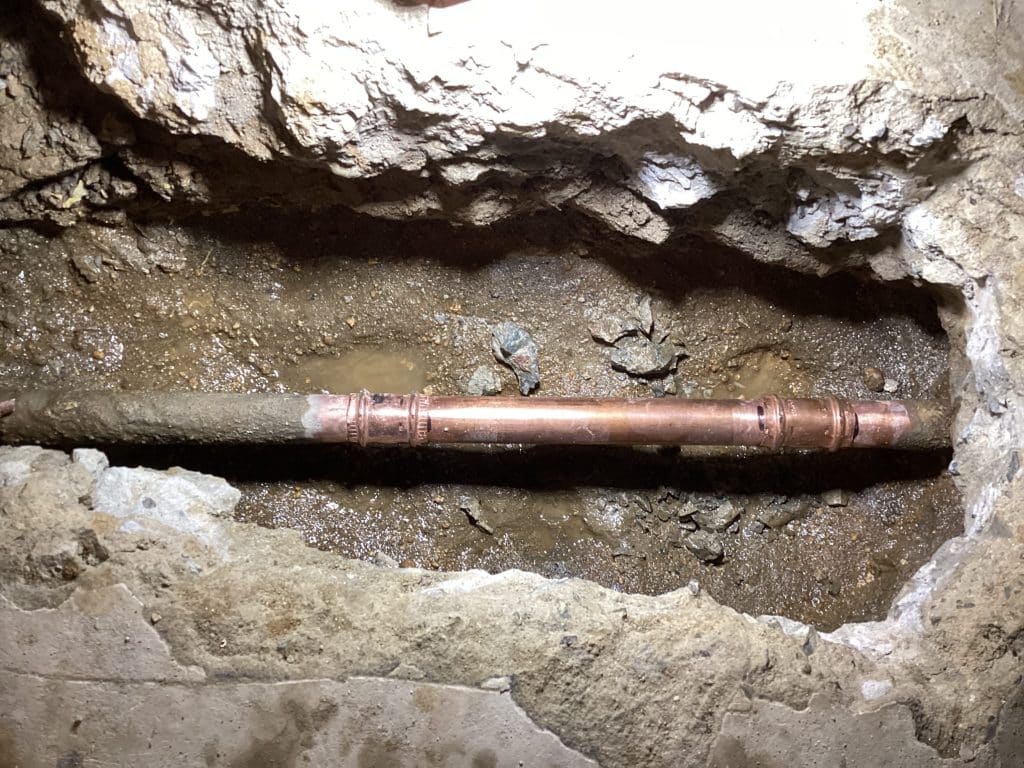
A copper repair section soldered into an open slab trench on one of our San Diego jobs
Why It Matters

Benefits Of Septic Line Locating

All of them come down to the same thing: knowing beats guessing, and guessing here is expensive.

Nothing Gets Hit

Fence posts, footings, pool digs and tree plantings are the four things that most often go through a septic line. Marked lines do not get hit.

Time And Cost Savings

Finding the tank is billable time on every septic call. Locating it once, properly, means nobody is paid to hunt for it again.

Preventative Maintenance

A tank you can find is a tank that gets pumped and inspected on schedule. A tank nobody can find gets ignored until it fails.

Compliance And Safety

Permits and property records often require the system located and documented. Exposure to what is in a septic line is its own reason to leave it to equipment.

Renovations And Upgrades

An addition, an ADU, a pool or a driveway all need to know what is under them before the plans are final, not after the concrete is poured.

Before A Pump-Out

Pumping starts with access. Locating the tank and its lids first turns a two-visit job into one.

When To Call

Four Reasons People Need This

Three of them are cheaper before the fact than after it.

Before A Yard Project: Your Situation

  • Planning a fence, deck, pool or ADU
  • Nobody knows where the tank sits
  • Old drawings that may not match reality
  • Contractor asking you to mark utilities

Before A Yard Project: What We Do

  • Locate the tank and trace the full line
  • Mark it on the surface for your crew
  • Record the depth, not just the position
  • Give you something to hand the contractor

A System Acting Up: Your Situation

  • Slow drains and gurgling throughout
  • Foul odors indoors or over the yard
  • Soggy ground or backups in the yard
  • More pest activity than usual

A System Acting Up: What We Do

  • Locate before anything is opened up
  • Camera the line to find the actual fault
  • Tell you if it is the line or the tank
  • Quote the repair against what is really there

Buying Or Selling: Your Situation

  • No records of the septic system
  • An inspection that needs the tank located
  • A buyer asking where the leach field runs
  • A permit that requires documentation

Buying Or Selling: What We Do

  • Locate and document the system
  • Provide depth and position for the file
  • Camera inspection if condition is in question
  • Straight answers for the transaction

Before A Pump-Out: Your Situation

  • Tank has not been pumped in years
  • Lids buried and unmarked
  • A pumper who charges to search
  • Access uncertain before the truck arrives

Before A Pump-Out: What We Do

  • Find the tank and its access lids
  • Mark them so the pump truck goes straight to work
  • Note anything that will block access
  • Turn two visits into one
Worth Knowing

Locating It Yourself Versus Having It Located

It is genuinely possible to find a septic tank with a probe rod and patience. Here is what the difference actually is.

Professional LocatingProbing It Yourself
MethodPipe locator and cameraProbe rod and guesswork
The lineFull run traced and markedTank maybe, line rarely
DepthMeasured and recordedUnknown until you hit it
Risk to the systemNothing is touchedProbes crack lids and pipe
ExposureNothing openedBacteria and pathogens if breached
What you keepMarks, depth and documentationA rough memory of where it was
If it goes wrongLicensed and insured, CSLB #1103201Repair plus cleanup, on you
How It Works

How A Locate Runs

1

Start From What Exists

Cleanouts, records, and the way the house drains all narrow it down before any equipment comes out.

2

Trace And Mark

Pipe locating equipment follows the run. We mark the surface along the line and over the tank, and record the depth at each point.

3

Hand It Over

You get the marks, the depths and a clear description of where everything runs, so your contractor or the next owner is not guessing.

Satisfied Customers

What Our Customers Say

★★★★★

"Cesar was very knowledgeable and professional. He knew what the problem was and resolved our issue very quickly! Would highly recommend Hack's Plumbing & Drain to my family and friends!!!"

Eloise VigliottiGoogle Review
★★★★★

"I've been working with Hack for over 20 years, he and his team are the only ones I trust. From small job to large, they always get it done right and take care of you."

Robert PeelleGoogle Review
Frequently Asked Questions

Your Septic Locating Questions, Answered

Why does it matter where my septic tank and line are?
Because the cheapest way to damage a septic system is to dig into it during landscaping, construction or yard work. Knowing the location prevents that, and it makes any later repair faster because nobody has to hunt for the system first.
What are the risks of locating it myself?
Accidental damage to the tank or line, exposure to bacteria and pathogens if you breach something, and property damage from a backup if a probe cracks a lid or pipe. A probe rod finds things by hitting them, which is the problem.
How do professionals locate septic tanks and lines?
Pipe locating equipment, camera inspection, and the unglamorous work of reading the property records and following how the house actually drains. Usually all three, because each narrows down what the others confirm.
What are the signs of a failing septic system?
Slow drains, gurgling from drains, foul odors indoors or in the yard, sewage backing up, soggy ground over the leach field, and increased pest activity. Several of those together is the signal.
Can I pump my own septic tank?
It is possible, and it is usually a false economy. Pumping needs the right equipment, safe handling of what comes out, and legal disposal of it. Most people who try once do not try twice.
Do you locate septic systems across San Diego County?
Yes, including the inland and rural areas where septic is most common: Fallbrook, Ramona, Bonsall, Alpine, Pauma Valley and the surrounding communities.
Septic Locating

Need To Know Where It Runs?

Tell us what you are planning or what the system is doing. We'll locate the tank and line, mark them, and give you the depths before anyone digs.

  • Marks and depths documented for your records
  • Flat-rate price before any work begins
  • 100% satisfaction guarantee
Prefer to talk? (858) 326-2860

Request Your Estimate

We respond fast during business hours, and faster in an emergency.

No spam, no obligation. We only use this to schedule your service.

Related

What People Usually Need Next

More On Sewer Line Repair

Once the line is located, the repair or replacement work.

See Sewer Line Repair

More On Camera Inspections

Seeing the condition of the line, not just where it runs.

See Camera Inspections

Plumbing In Your City

Neighborhood-level notes for the eight cities we publish, from coastal corrosion to hard water inland.

See Service Areas


Call Now Request Estimate