Get Three Quotes. Then Read This.
A repipe is the most expensive plumbing job most homeowners will ever buy, and the one they are least equipped to compare quotes on. So here is the honest advice first: get three. Then compare them on the things below, not on the number at the bottom.
What you are actually paying for is scope and restoration. Whether every line is replaced or only the failing ones. Whether the quote includes patching and texturing the walls it opens, or leaves that to you. Whether it is PEX or copper, and why. Two quotes that differ by thousands are usually quoting two different jobs.
We quote fixed price, in writing, with the scope and the restoration spelled out. If a partial repipe solves your problem, that is what we will quote you.
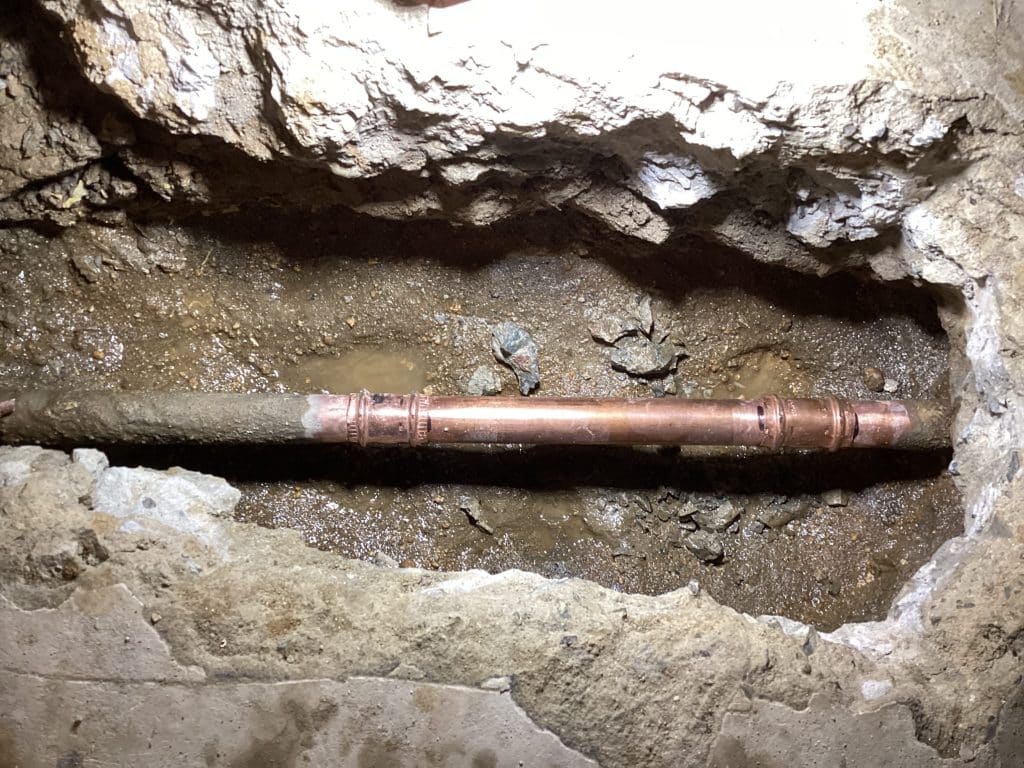
One of these is a repair. Three or four together is usually the system, not the pipe that happened to fail.
A pinhole leak is a repair. Pinhole leaks in different places over a couple of years mean the pipe material is failing, and patching each one is paying repeatedly for a problem you already understand.
Corrosion and scale narrow the inside of a pipe over decades. Pressure that has faded gradually across the whole house is different from one fixture running slow.
Brown or rusty water, especially on the first draw of the morning, is the inside of your supply line arriving at the tap.
Taste and smell change as pipe degrades. It is unpleasant rather than dangerous in most cases, but it is a real signal about pipe condition.
A bill climbing with no change in usage usually means water is leaving the system somewhere you cannot see it.
Galvanized steel from before the 1960s and some 1970s and 80s materials have known lifespans. If your home is in that window and showing any sign above, the two facts are related.
Both are good. They are good at different things, and anyone who tells you one is simply better is selling what they prefer to install.
| PEX | Copper | |
|---|---|---|
| Cost | Lower material and labor cost | Higher on both |
| Install disruption | Flexible, needs fewer wall openings | Rigid, more access required |
| Lifespan | Long, but shorter than copper | Longest of the common options |
| Corrosion | Not affected by hard water | Can pinhole in aggressive water |
| Freezing | Expands somewhat before splitting | Splits |
| Resale perception | Accepted, occasionally questioned | Universally seen as premium |
| Best fit | Most homes, most budgets | Long-term ownership, exposed runs |
Ask every contractor these seven questions, including us. The answers explain most price differences.
| Ask about | What a good answer looks like | What should worry you |
|---|---|---|
| Scope | Exactly which lines are replaced, in writing | "The whole house" with no detail |
| Restoration | Patch, texture and paint included or excluded, stated | Not mentioned at all |
| Price type | Fixed price for the defined scope | Hourly, or "time and materials" |
| Permits | Pulled and inspected, included in the price | Skipped, or left to you |
| Timeline | A day count and a water-off plan | "A few days" with no commitment |
| License | CSLB number given without being asked | Vague, or a number that will not verify |
| Warranty | Written, on labor and materials both | Verbal, or materials only |
Every fixture, every run, and where the walls will need to open. This is what makes a fixed price possible instead of an estimate that moves.
Scope, material, restoration and permit all in one written price, with a day count and a plan for when the water is off.
New lines in, pressure tested, permit inspected, and the walls we opened put back the way we agreed in the quote.
"Cesar was very knowledgeable and professional. He knew what the problem was and resolved our issue very quickly! Would highly recommend Hack's Plumbing & Drain to my family and friends!!!"
"I've been working with Hack for over 20 years, he and his team are the only ones I trust. From small job to large, they always get it done right and take care of you."
We'll walk the house, scope it properly, and give you a fixed written price with the restoration spelled out. Compare it against the other two.
Locating the current leak, which is usually what starts a repipe conversation.
See Leak DetectionRepiping is the moment to deal with a heater that is already near the end.
See Water HeatersNeighborhood-level notes for the eight cities we publish, from coastal corrosion to hard water inland.
See Service Areas