Almost everyone believes a pipe bursts because the ice inside it expands until the metal gives way. It is a reasonable guess, and it is wrong. Understanding what actually happens is the difference between protecting the right pipe and protecting the wrong one.
It is pressure, not ice
When water freezes in a line, the ice plug does not push outward hard enough to split copper on its own. What it does is block the pipe. Any water still trapped between that plug and a closed tap has nowhere to go, and as the plug keeps growing, the pressure in that trapped section climbs fast.
The pipe then fails at its weakest point, which is usually downstream of the ice, somewhere between the blockage and the closed faucet. That is why the split is often nowhere near the frozen section, and why people are surprised by where the water shows up.
This is also why letting a tap drip works. It is not about keeping water moving fast enough to resist freezing. It is about leaving the pressure somewhere to escape.
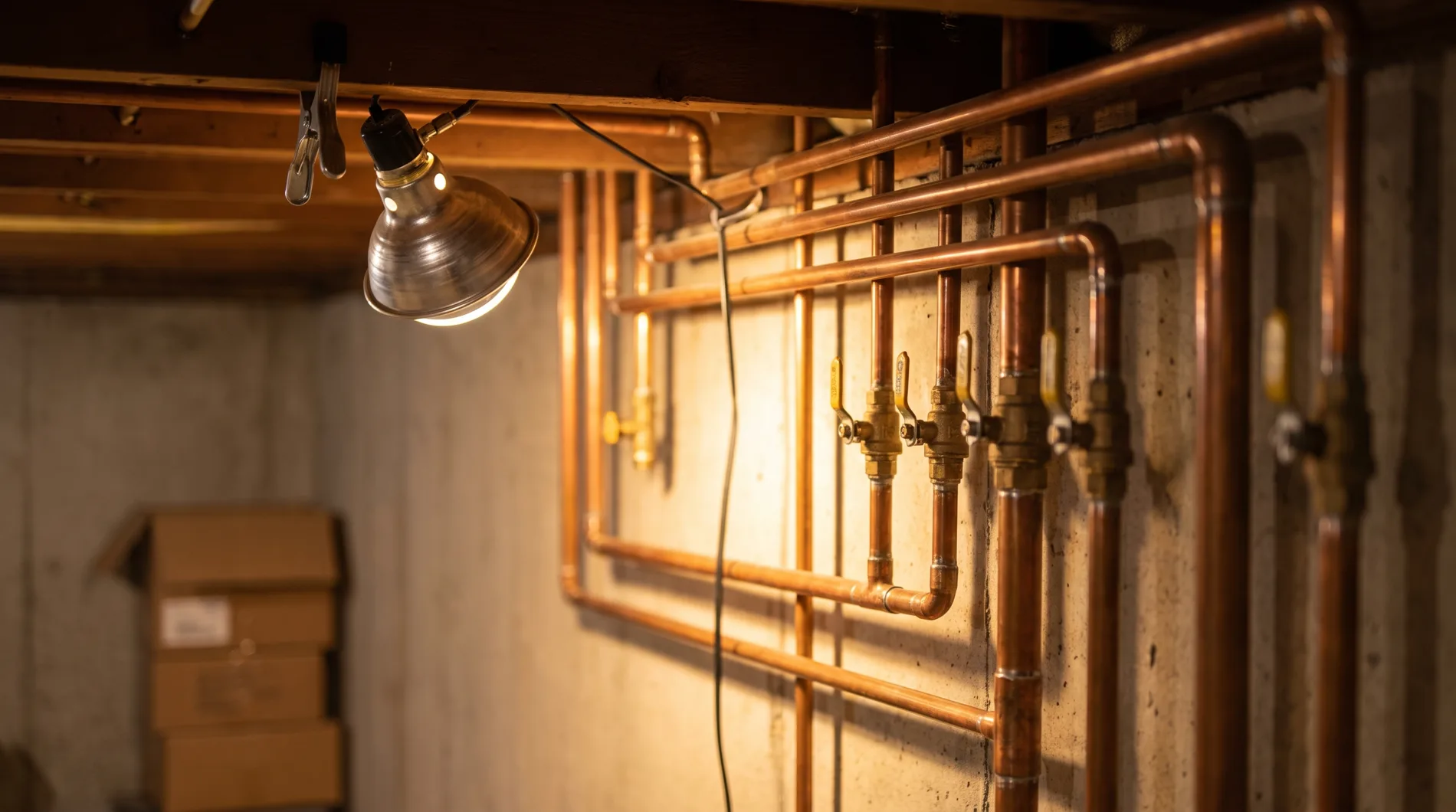
Which pipes are most at risk
In Twin Ports housing stock, risk tracks almost entirely with where the pipe runs rather than what it is made of.
| Where the pipe runs | Risk | Why |
|---|---|---|
| Exterior wall | Highest | Common in pre-war homes with little or no wall insulation. The pipe sits between cold sheathing and a warm room, and only one of those is helping. |
| Unheated crawl space | High | Cold air pools low and sits there. A crawl space can run far colder than the room above it. |
| Attic or above a garage | High | An unheated space on the other side of a ceiling, often with a bathroom line running through it. |
| Basement, near a rim joist | Moderate | Usually fine until a draft finds it. Rim joists are a common air-leak point. |
| Interior wall, heated room | Low | Surrounded by conditioned air on both sides. |
Notice what is not in that table: pipe material. Copper, PEX, and galvanized all fail under enough trapped pressure. PEX tolerates some expansion better than copper, which buys time, but it is not immune.
What to do in a cold snap
- Open cabinet doors under sinks on exterior walls so room air can reach the pipes behind them.
- Let a faucet drip, and pick the one furthest from where the water enters the house. This relieves pressure rather than preventing ice.
- Keep the heat on in rooms you are not using, and do not set back the thermostat overnight during a hard freeze.
- Find your main shutoff now, before you need it in the dark. Everyone should know where it is.
If a pipe has already burst: shut off the main first, then call. And do not thaw a frozen line with an open flame, which is how a plumbing problem becomes a house fire.
Why this matters more here
A frozen pipe is a rare event in most of the country and a seasonal category in this one. Twin Ports housing skews old, wall insulation is often minimal, and supply lines routinely run through exterior walls because that is how houses were built when these ones went up. Add a week below zero and the arithmetic is not in your favour.
It is also why a no-heat call in January is urgent rather than uncomfortable. Once the house stops being heated, the vulnerable runs start cooling well before the living space feels alarming.